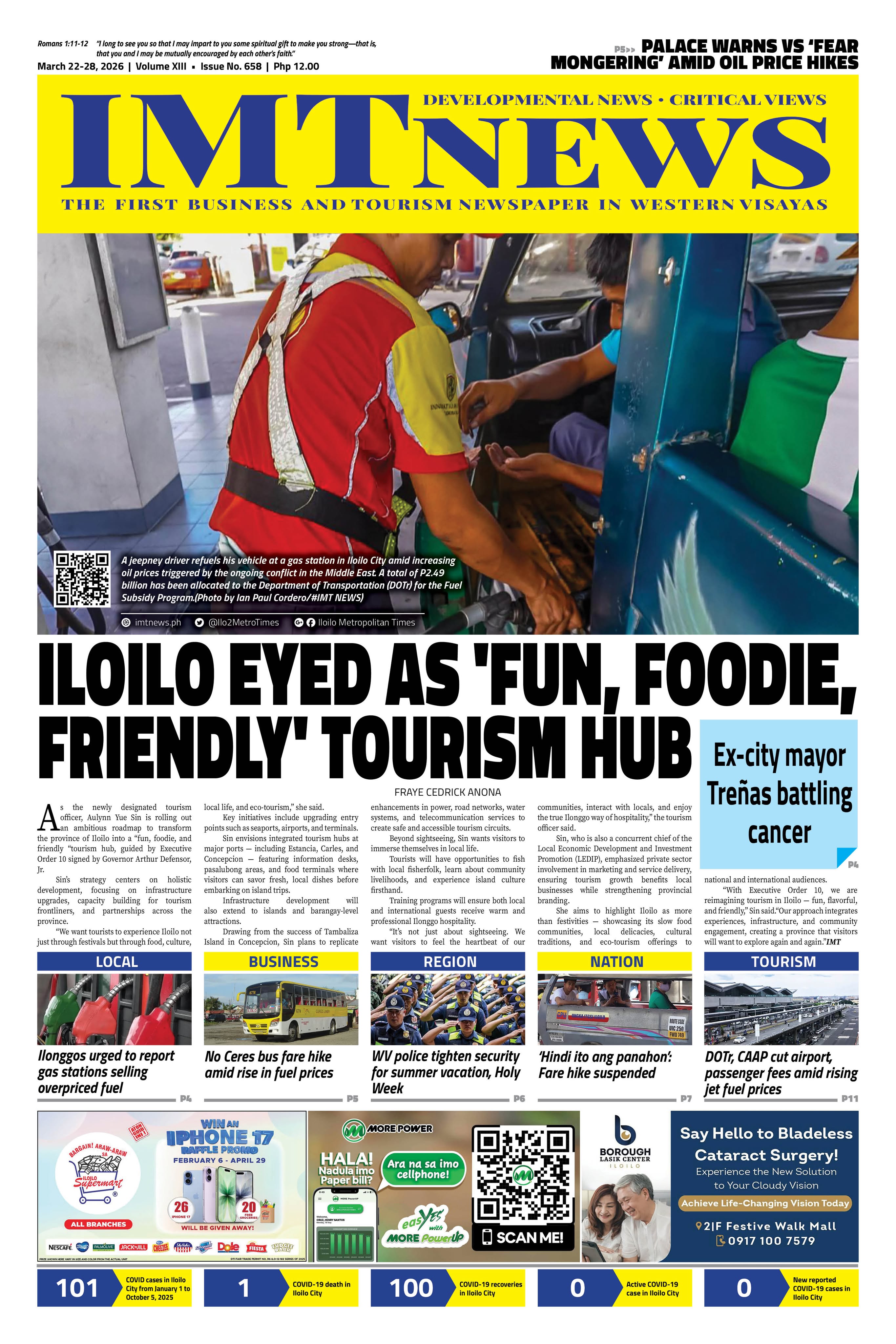

A looming transport shutdown on March 23 is exposing deeper cracks in Iloilo’s public transport system, as operators warn that rising fuel costs are pushing the sector to the brink of collapse.
Transport cooperatives across the city have declared a coordinated “transport holiday,” threatening to halt operations on most routes—from traditional jeepneys to modernized units—unless urgent government intervention is delivered.
Raymundo Parcon, Western Visayas Transport Cooperative (WVTC) chairman, said the move reflects weeks of mounting frustration over what public utility vehicle (PUV) operators see as inaction on their calls for relief.
Key routes, including Tagbak Terminal, Mohon Terminal, Diversion Highway, and Jaro CPU, are expected to be affected.
At the center of the standoff is a demand for a provisional P7 fare increase, which transport groups say is a necessary stopgap as fuel prices continue to surge.
The proposed adjustment, Parcon stressed, is temporary and meant to stabilize operations until prices normalize.
Behind the protest is a growing financial strain. The cooperative, he said, is losing up to P100,000 daily, with diesel prices projected to climb as high as P130 per liter and gasoline potentially exceeding P100 per liter in the coming weeks.
Despite earlier assurances, operators claim subsidies have yet to reach them, even as global oil pressures continue to ripple through local transport costs.
Parcon acknowledged that commuters will bear the immediate impact of the shutdown, but argued that the disruption is a last resort.
Operators, he added, are prepared to face possible sanctions—from show cause orders to franchise revocations—highlighting the gravity of their situation.
“This is no longer just a protest,” Parcon said. “Drivers and operators are already struggling to survive.”
As the deadline approaches, the planned transport holiday signals more than a one-day disruption—it underscores a widening crisis where rising costs, delayed assistance, and policy gaps are converging, leaving both commuters and transport workers caught in the fallout.IMT